
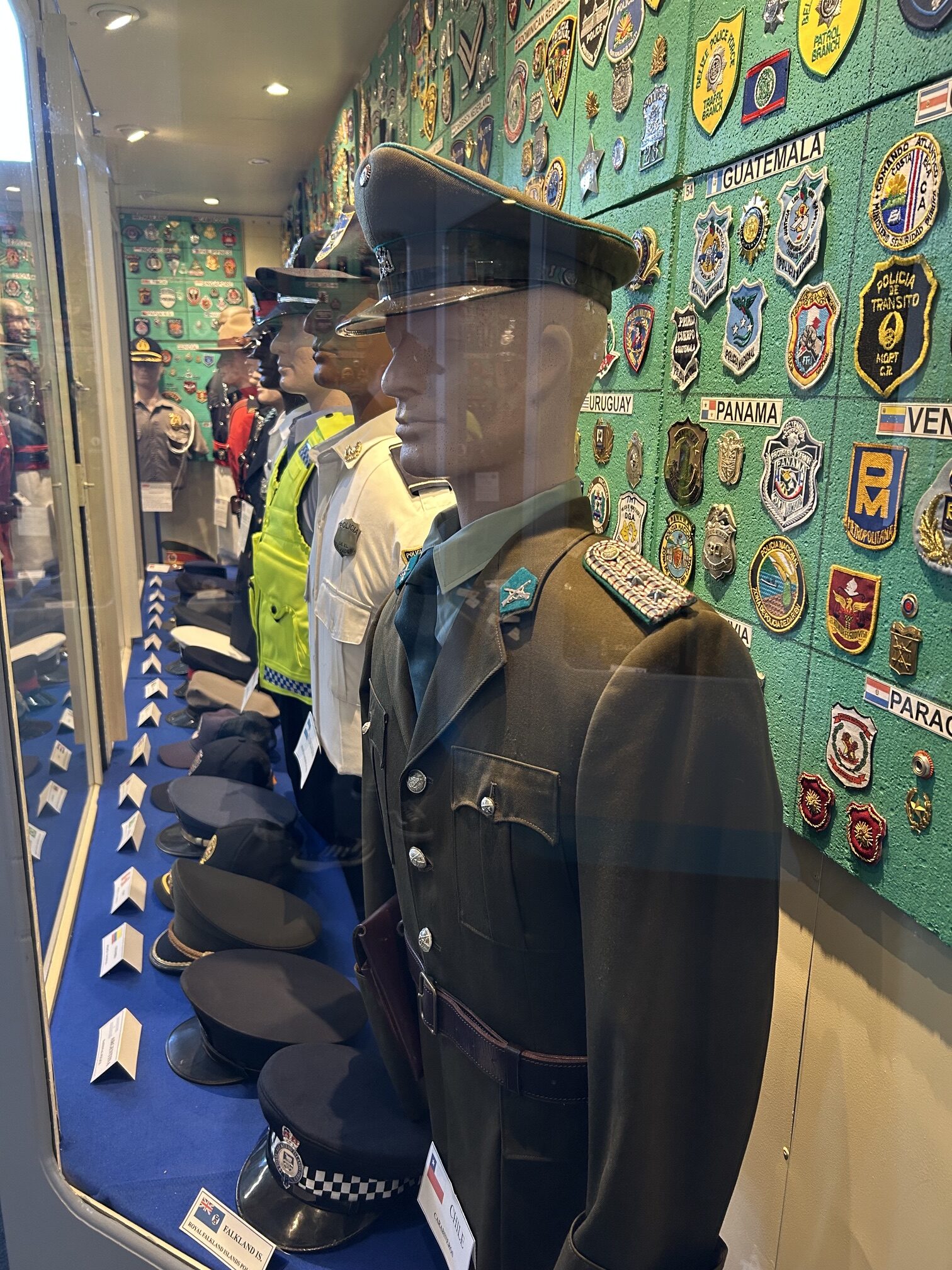
Police Museum, Bell St
Two hundred years of the UK’s oldest police force, Glasgow’s most famous murders and robberies – and how The Stone of Destiny ended up in a Glasgow police station. They’re all at the centre of a remarkable museum in Merchant City.
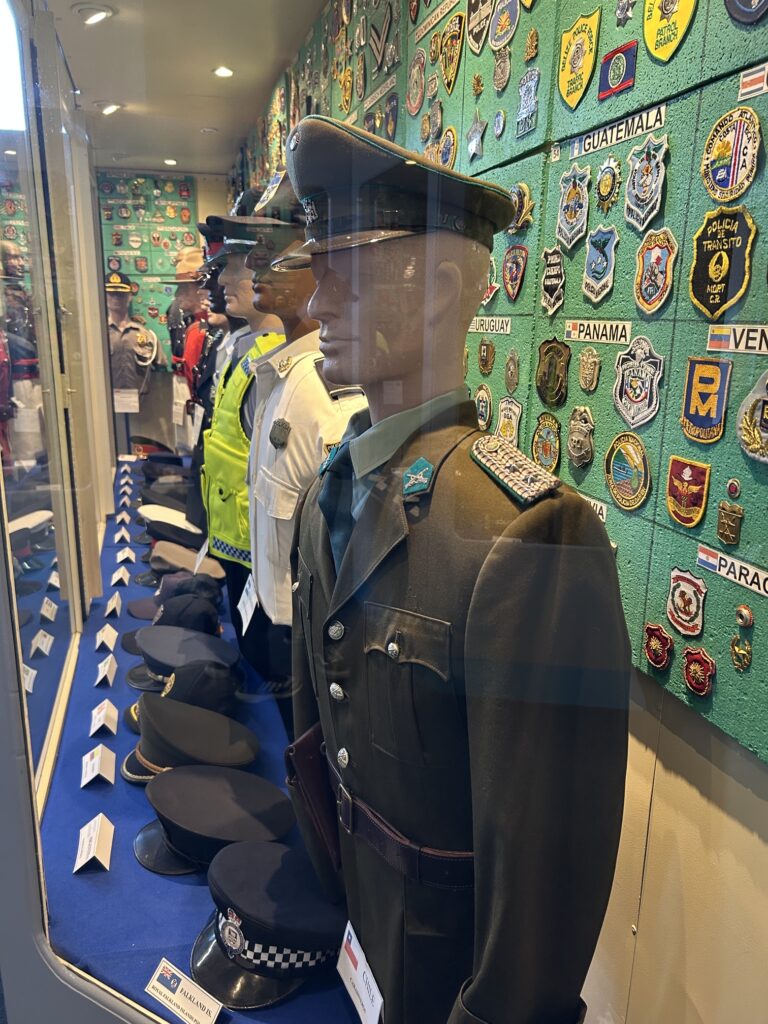
The Glasgow Police Museum in Bell Street tells the story of the city’s police force, founded by the city’s Merchant and Trades Baillies in 1779 and set up under an act of Parliament in 1800.
The first central police office was in Albion Street and the first Muster held in the Laigh Kirk (Tron Church). It was attended by the Chief Constable, sergeants, policemen and ‘Watchmen,’ the latter’s role including the important job of calling the hour. Officers patrolled in top hats.
The fascinating array of exhibits includes weapons, medals, uniforms worn not only in Glasgow but by police around the world, and a charge book signed by Britain’s first detective, Peter McKinley, in 1817.
Among featured equipment are wooden rattles, known as clappers (source of the phrase ‘Run like the clappers’) used as a warning until replaced by whistles.
Featured infamous crimes include investigations into bodysnatching from the Ramshorn Church graveyard, the robbery of the Paisley Union Bank in Ingram Street in 1811 and the case of New York-born Peter Manuel, hung in Barlinnie for the murder of seven people in 1958.
The Stone of Destiny, the 150kg sandstone block on which monarchs were crowned and stolen from Westminster Abbey by a group of Glasgow University students, was kept in the central police station in 1951 after it was recovered. Police officers used it as a card table, saying they’d sat on it longer than any King or Queen. A copy, made for a 2008 film, occupies one of the cabinets.
Run by retired policemen and set up by the Glasgow Police Heritage Society, the museum was named Glasgow’s ‘Best Day Out’ in 2019 and Museum of the Year in 2024.
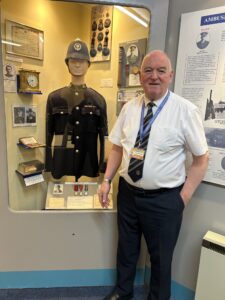
Free to visit, it receives no public funding and is totally financed by donations from visitors, more than 11,000 of whom come each year.
Curator Alastair Dinsmor (retired) retired as an Inspector after 33 years service and was awarded an MBE for his services to police heritage.
“We’re very proud of what we have here and always ready to answer questions and chat,” he says. “The personal touch enhances the experience. What drives me on is a passion for preserving Glasgow’s police history. it’s amazing – and unique.”
Glasgow Police Museum, 1st floor 30 Bell Street, G1 1LG
Tel. 0141 552 1818
Em: curator@policemuseum.org.uk
Open April-October Mon-Saturday 10-4.30, Sunday 12-4.30
1 November – 31 March Tuesday 10-4.30, Sunday 12-4.30
Read about Alastair’s private collection at dinsmorepolicecollection.uk

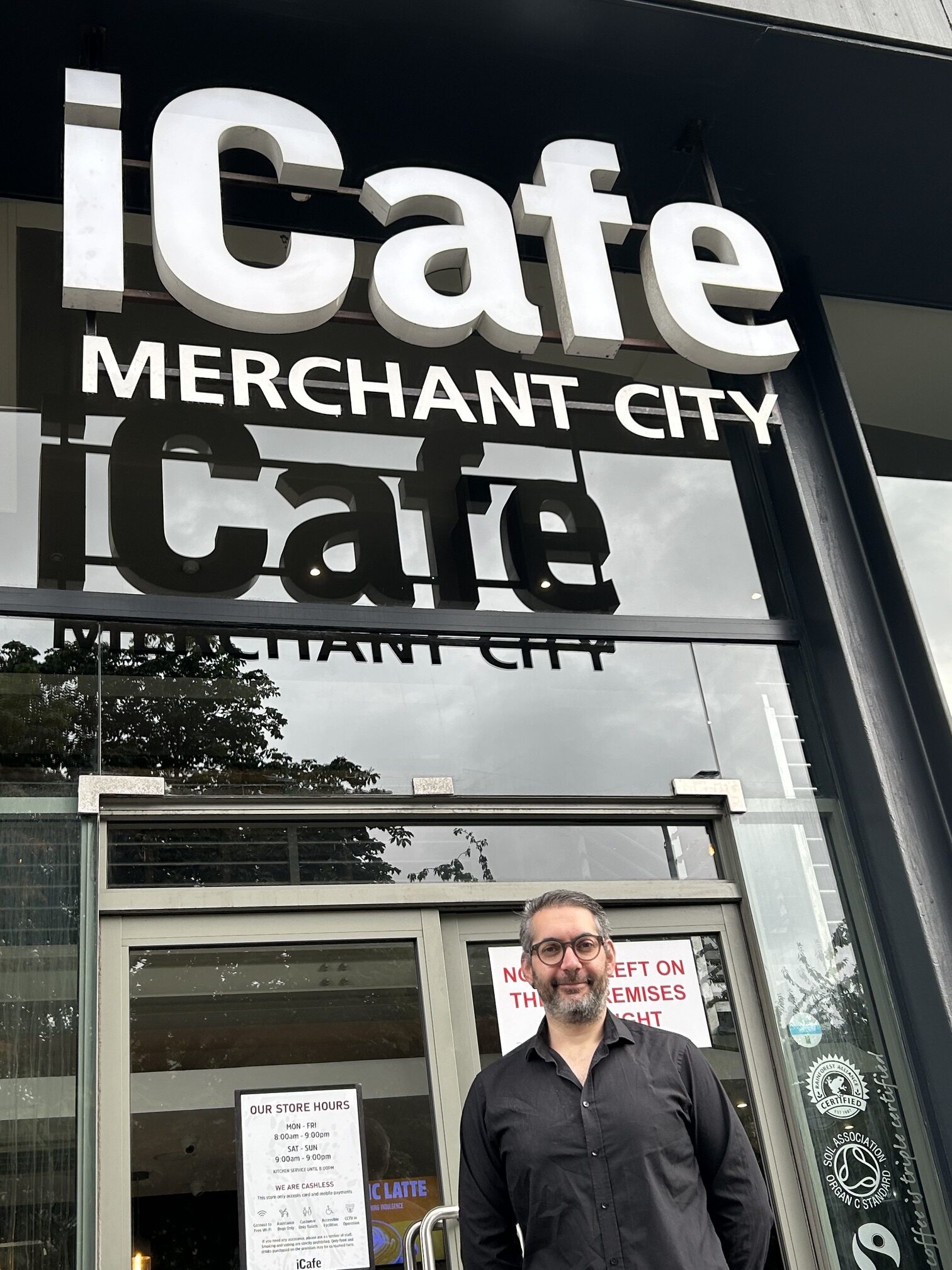
Spotlight on iCafe
iCafe in the Merchant City
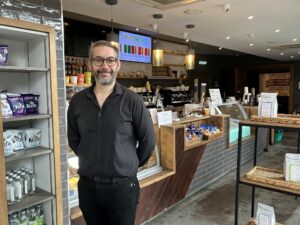
Initially aimed at students and those with little or no access to the Internet, the group of iCafes in Glasgow are now firmly embedded in their local communities and attracting increasing numbers of visitors to the city.
Launched two decades ago with a single 10-seater cafe by Umer Ashraf Malik when just a teenager, the chain now comprises branches in Ingram Street, Woodlands Road and Bridgeton Cross with a fourth due to open in December at Springfield Quay.
Internet cafes or cybercafes mushroomed in the 1990s in response to demand for shared access to computers with high bandwidth.
“Most people now have their own computer in the form of a mobile phone or laptop but we offer an ideal, relaxing way to work and communicate with friends and family,” says Marco Di Chio, Group Business Manager and Manager of the flagship Ingram Street outlet. “Love of people and coffee is at the heart of everything that we do,” he adds. “Our menu also features a wide variety of freshly prepared dishes, all made with premium 100% Halal ingredients. This commitment to quality and inclusivity reflects the diverse city we serve and ensures there’s something for everyone.”
People living in small apartments appreciate space to spread out to work or simply get a change of scenery. Those in offices like a break from the day-to-day hubbub; remote workers find a peaceful environment with beverages and food on hand.
Private meeting rooms can be hired at £15 an hour and the Ingram Street cafe also hosts training courses, language lessons, a book club and small birthday parties.
The staff of 40 enjoy fixed hours contracts, not zero hours ones, and iCafe participates in apprenticeship schemes with Skills Development Scotland for young people in hospitality.
Interestingly, Marco is witnessing Glasgow’s increasing popularity as a tourist destination in its own right, with visitors coming just to see round the city, not book-ending their stay in Scotland.
The city’s mural trail is a major attraction and he bemoans the fate of the world famous wildlife mural opposite the Ingram Street premises, due to be partially obscured by the construction of more than 100 apartments. MCTCC selected its design and campaigned for many years, so far unsuccessfully, for the car park in front of it to be transformed into Merchant City’s first park.
“Our role as a community hub is something we value deeply,” Marco sums up. “We’re proud to support opportunities for people to connect, create, and share.”
Interesting fact about Marco: He grew up in Verona, speaking Venetian – a language, he stresses, not a dialect.
Chapter One - a New Chapter in Glasgow's Retail History
Chapter One – a new Chapter in Glasgow’s Retail History
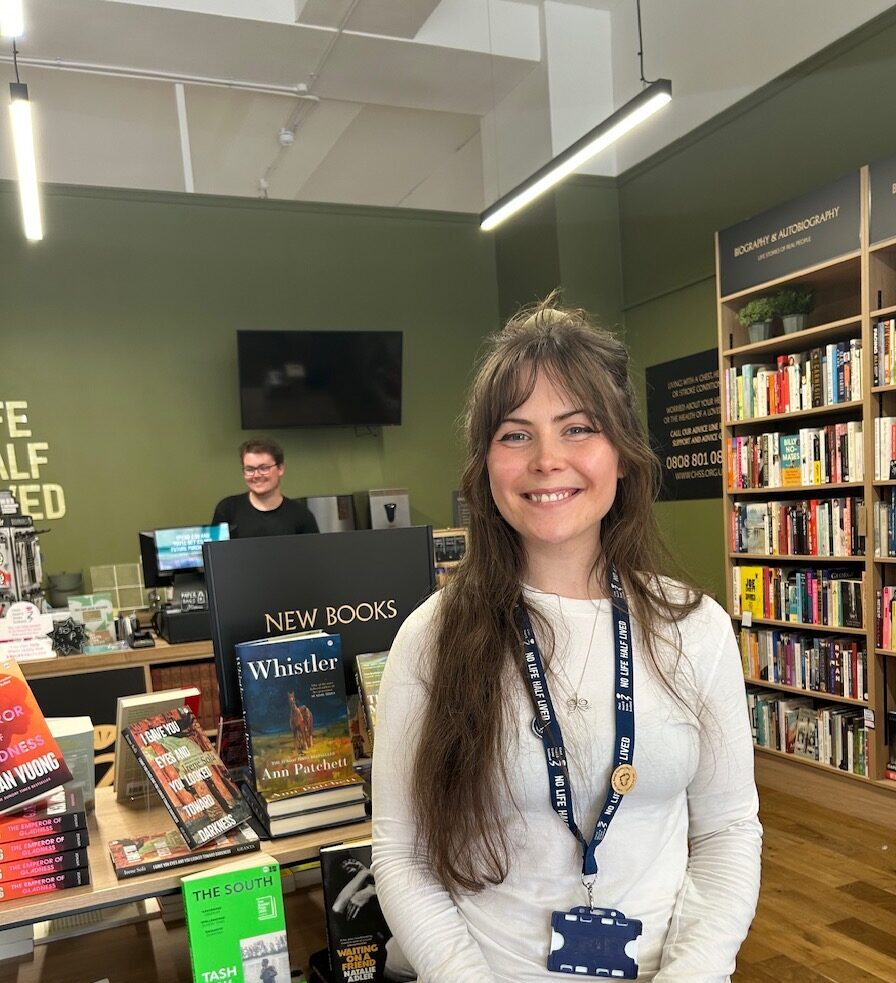
Milly Cooke is writing another chapter in Glasgow’s retail history.
Chest Heart and Stroke Scotland (CHSS) opened its first bookshop in the country last November. It is the charity’s first presence in Glasgow city centre.
Located at Glasgow Cross, Chapter One has several thousand books for sale at an average of under a fiver each, plus a number of new titles. Stock and displays are refreshed regularly.
Customers can browse in a comfortable, relaxing setting over a cup of coffee or tea.
“We’re always looking for donations in aid of a great cause,” says Manager Milly, who’s originally from Exeter. “Our location in the heart of Merchant City is perfect, there’s a great buzz in the area, and we’re filling a gap by providing a stylish, spacious, welcoming place for people to choose their next read.”
CHSS is Scotland’s largest health charity. Every day in Scotland more than 30 people will have a stroke or heart attack, 16 will be diagnosed with heart failure and another 16 will be diagnosed with coronary heart disease.
Check out Chapter One on Instagram at chapter_one_CHSS or email trongateshop@chss.org.uk.
Welcome to The Nook
Welcome to The Nook
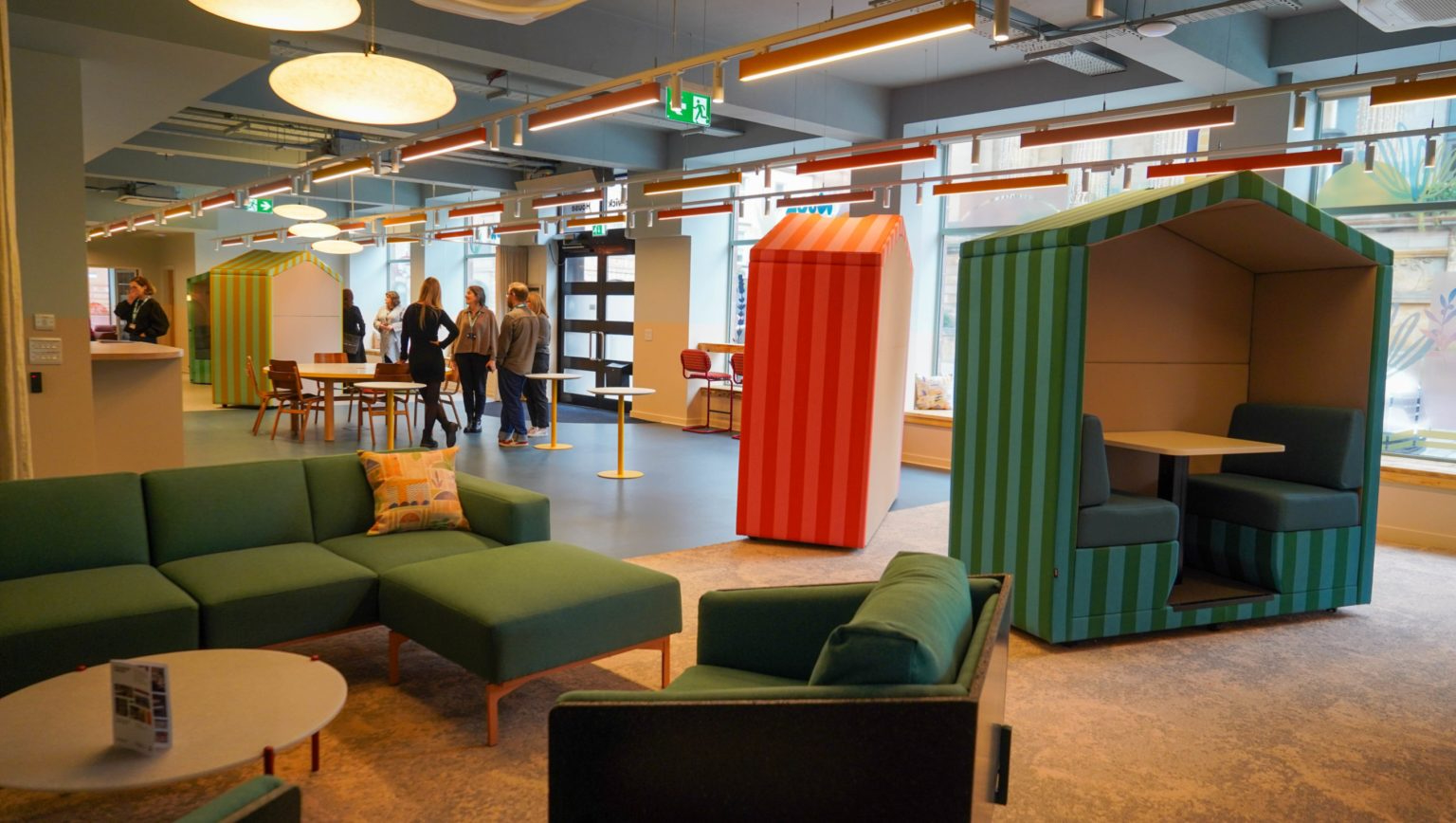
One of the most groundbreaking recent developments in our area has been creation of The Nook, the first in a national network of free, walk-in mental health support hubs run by Scottish Action for Mental Health (SAMH).
Opened in Wilson Street in October 2025, it is due to be followed by similar facilities in Aberdeen, Edinburgh, North Lanarkshire and Clydeside.
Team Leader Fraser Scott explained: “Many people are stuck in a cycle of referrals, waiting lists and barriers to accessing ongoing support. The Nook offers a simple alternative: a place where anyone could ask once and get help fast. No rejection, no waitlists, no stigma. Just compassionate support for whoever comes in.”
The Nook provides support to young people (10+), families and adults experiencing mild to moderate mental health problems impacting day-to-day living as well as to people supporting others.
This includes one-to-one support with a practitioner as well as weekly group activities like arts and crafts classes and peer support groups. Since opening, it has already welcomed more than 3,000 visitors and completed some 2,200 one-to-one support sessions, with 1,200 visitors registered for an account which allows them to book appointments, schedule classes and access a library of resources.
Its colourful interior was designed by Anna Campbell Jones, a judge of the BBC TV series, Scotland’s Home of the Year.
SAMH, based in the same building, operates 70 services in communities across Scotland. These also cover health social care, addictions, employment, suicide prevention and dementia care.
RNIB Scotland: Getting Around the City Centre
RNIB Scotland: Getting Around the City Centre
We were delighted to welcome RNIB Scotland to our November meeting to discuss the challenges faced by blind and partially sighted people when they are out and about.
Eileen Clarkson, Campaigns Officer, RNIB Scotland, explains some of the issues:
My colleague Alan Stewart and I welcomed the chance to talk about what it’s like for someone with sight loss navigating Glasgow’s streets.
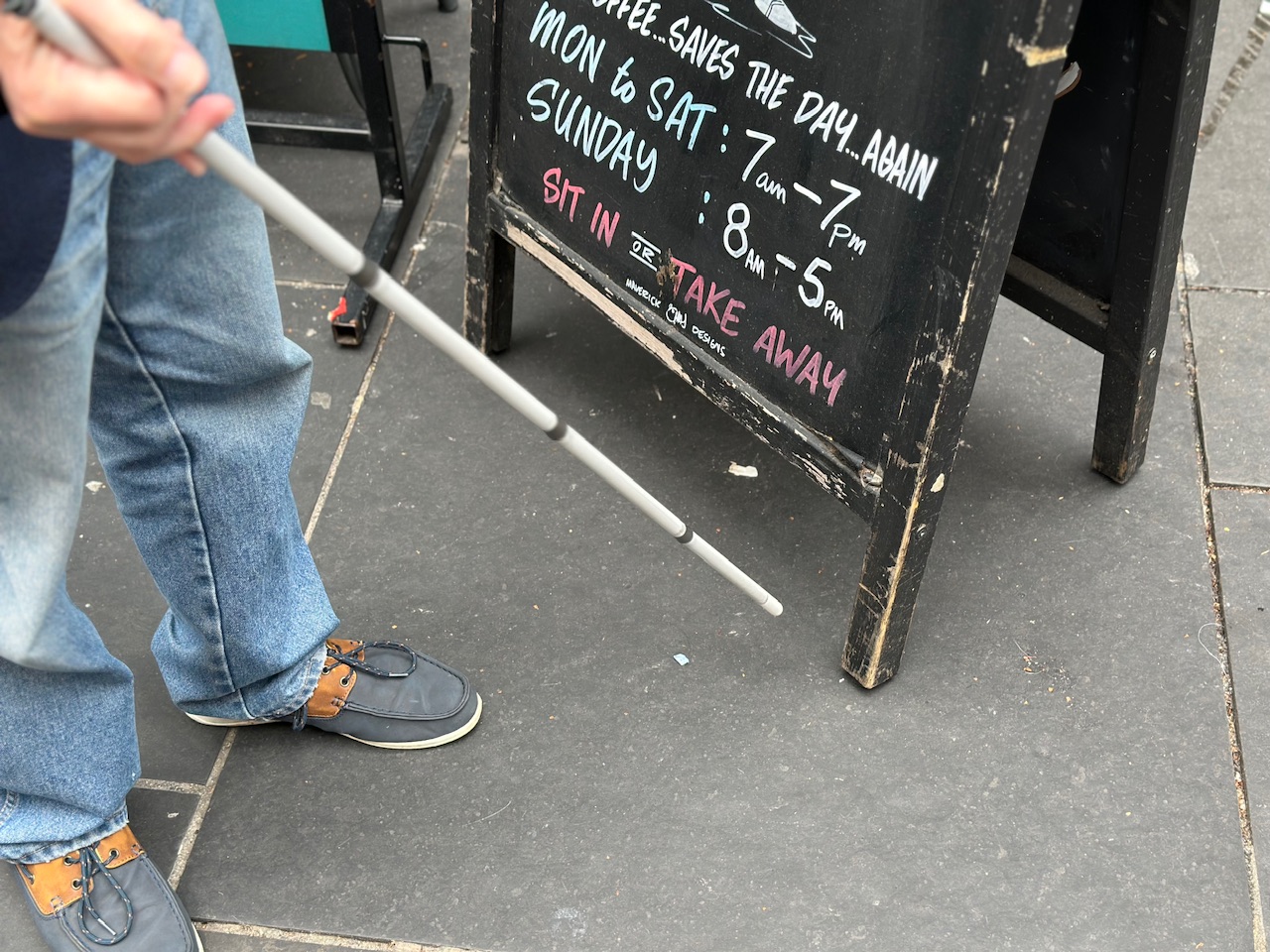
Even things that appear aesthetically pleasing such as street furniture and planters can be a hazard. Equally dangerous are badly placed bins, poles or advertising boards. For most sighted people dodging obstacles is relatively easy but this is not the case for people in the blind and partially sighted community.
As the landscape of our city centre changes, blind people must mentally relearn how to navigate their way. Controlled crossings, well-placed tactile paving – the bumpy slab at the paving edge that indicate changes in the street – and clear roads all help make it easier for people to get around.
As someone with sight loss who visits the Merchant City often, Alan shared some of the tactics he employs – for example how he uses his cane to let people know he is approaching and also for detecting potential hazards.
We hope raising these issues will help people realise what makes for a safe and welcoming environment for those who are blind and partially sighted, and recognise the challenges.
Stop! Look around! Ask if this would be a safe environment for someone who is blind – and think what you can do to improve it.
Merchant City and Trongate is one of the most historic and interesting parts of our city. RNIB Scotland wants it to be accessible for everyone.
To find out more please find the link to our Street Credibility Report: RNIB Scotland calls for Street Credibility | RNIB