
MCTCC Local Place Plan Published
Local Place Plan Published
MCTCC are delighted to announce that our Local Place Plan has been validated by Glasgow City Council. This marks the culmination of several months of effort by Merchant City and Trongate Community Council and the local community.
Read our Local Place Plan

Planning Policy Statements
Planning Policy Statements
PS01 Architectural Aspirations
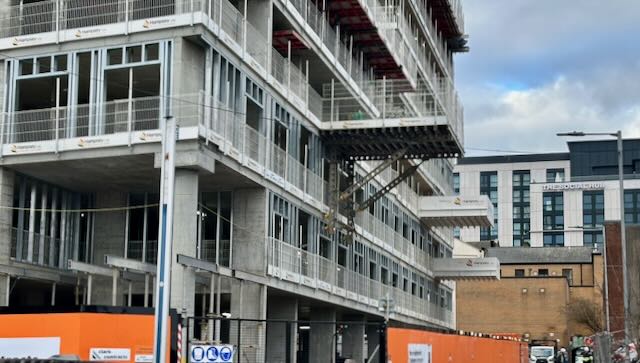
MCTCC’s general view is that development Planning Applications for ‘inner city’ areas, like Merchant City and Trongate, should be restricted to fit well with adjacent existing, and/ or accepted, established architectural scale, materiality, quality, and tradition. MCTCC is open to ‘modern’ architecture that works within these values.
PS02 Existing Architectural Scales, Materiality, Quality, Traditions and Historical Context
Our expectations are that any development design team will undertake studies to explore the architectural heritage of any site under consideration with a view to incorporating legacy lessons learnt into their proposals.
MCTCC recognises that new Development schemes are most likely to be ‘modern’ in aesthetics, but prefers proposals that have deferred to heritage legacy, learnt from that, and have considered combining a modern approach with ‘traditional’ existing architectural scale, materiality, quality, detail and tradition.
Our expectations are that new developments are designed to be sympathetic to Glasgow heritage. MCTCC requires that development design teams propose solutions that demonstrate architectural merit with creative character and visual interest, thereby offering solutions that are conducive to the health and wellbeing of the city and its inhabitants.
MCTCC’s expectation in particular is that any development design team will take all positive actions to ensure that existing traditional stone facades will be retained within their proposed schematics, with restoration where needed.
MCTCC requires that, in the case where a new development proposes the demolition of existing traditional stone facades, the case for removal is clearly demonstrable and proven by professional testimony AND corroborated by further, independent, professional, ‘2nd opinion’ contribution.
PS03 Architectural Scale, and Tradition/ Tall Buildings
MCTCC accepts financial model cases that require Developments to be tall buildings. However, this should be in appropriate situations within consented Planning guidelines and/ or accepted parameters. That being the case, MCTCC believe that ‘tall’ development schemes should still reflect the architectural traditions and history of any site location.
PS04 Financial Viability – Hotel Accommodation
MCTCC is concerned about the amount of hotel accommodation being proposed in central Glasgow. It welcomes usage diversity by development teams, as far as possible encompassing hotel, apart-hotel, residential, and retail opportunities, etc.
MCTCC requires that development teams incorporate designs to facilitate readily-achievable change to that planned in order to accommodate future market change, either during design stages or post construction.
PS05 Financial Viability – Student Accommodation
MCTCC is concerned about the amount of student accommodation being proposed in Glasgow generally, and while we welcome the increased population and the increased ‘ambiance’ that will bring, we are concerned that the proposals for so many students may not be economically ‘sound’ and that, with an emphasis on student accommodation, full traditional residential potential may be compromised.
MCTCC is not against student accommodation, per se, in the right situation. For example, we are supportive of proposals for student accommodation where that restores ‘life’ to derelict, or under-utilised buildings, particularly those of historic and architectural interest.
MCTCC’s view is that the overall amount of planned Glasgow student accommodation may be questionable, possibly not ‘safe’, and is further concerned that if market demand alters then the Developer may be left with vacant floor space to contend with, should no ‘forward planning’ be incorporated.
MCTCC requires that provision is incorporated into any development design to facilitate readily- achievable change to any scheme, at design stage development, or, indeed, to post construction, to accommodate future market change.
PS06 Financial Viability – Housing Accommodation
MCTCC supports development proposals that accommodate usage much needed in the City, primarily full residential accommodation (either housing or apartment).
MCTCC supports development proposals that aim to convert to full residential accommodation upper levels of commercial, or retail-orientated buildings within the City that are not occupied, (either apartments, or assisted/ social housing apartments).
MCTCC supports National Planning Framework 4 (NPF4) guidelines in general and in particular on the NPF4 recommended percentage of total housing given over to Assisted/ Social Housing, in any housing Development.
We require that provision is incorporated into any development design to facilitate readily- achievable change to scheme, at design stage development, or indeed to post construction, to accommodate future market change.
PS07 Ground Level Retail, Restaurant and Similar Usage
MCTCC is concerned that, whether hotel, student accommodation, or housing proposals, at Ground level at least there is where appropriate a continuous and consistent retail frontage to discipline the presentation to street, and therefore to promote, maintain and encourage ‘footfall’ and good site ‘animation’.
For any Development scheme MCTCC requires a uniform datum and uniform detailing at ground level that forms a substantially continuous presentation for retail, restaurant and similar usage sub-letting.
PS08 Conflicting or Parallel Development Coordination
MCTCC is concerned that potentially conflicting Development design proposals are advanced with less than acceptable liaison between respective design teams. We expect full and proper liaison is carried out between respective and conflicts resolved prior presentation for public consultation.
PS09 Contribution to Local Environment Improvement
MCTCC recognises that many areas of Glasgow are less than ideal environmentally. It supports development proposals that include contributions to local environment street-scape improvements, including ‘greening’. Its expectation is that these improvements will include, but not limited to, improved lighting, walkways, street signage, street furniture, and street planting, etc.
Construction sites should not be left derelict for long periods of time. They can become eyesores, detrimental to the wellbeing of local residents and visitors, and to the city’s image. We require Glasgow City Council to take appropriate urgent action to have them cleaned up and the requisite planning permission(s) to be expedited and actioned.
PS10 Improvements to Public Facilities
MCTCC’s expectation is that any Development proposals should factor in the provision of new, additional ‘neighbourhood’ facilities, such as public toilets, food provision, medical practices, etc to support anticipated new and increased street ‘animation’.
It expects new or enhanced facilities to be supported by robust management strategies to maintain safe ‘footfall’, encouraging good pedestrian use and good site ‘animation’.
Recycling facilities (including paper, plastic, glass, food and textile) should be regularly re-assessed to fit in with public needs and contribute to fulfilment of the Net Zero policies of Glasgow City Council and the Scottish Government.
PS11 Integration of and Improvement of Adjacent Thoroughfares
MCTCC’s expectation is that proposed development schemes should improve the adjacent street network and surrounding areas.
PS12 Integration of Public Transport
MCTCC requires that any Development enhances the provision of public transport.
PS13 Hard and Soft Landscaping
MCTCC recognises that the Avenues programme is the agreed ‘backbone’ for Glasgow cityscape improvements, both in the MCTCC area and beyond. That supplemented by various Developer-led proposals currently underway. This ‘backbone’, however, ‘Avenues’ leaves a whole raft of streets untreated, barren, not contributing to environmental and general wellbeing improvements.
MCTCC supports supplementary ‘lighter touch’ cityscape tree planting programmes, wherever possible, complementary to ‘Avenues’, and spreading Avenues influence wider into the MCTCC community.
We require that all hard and soft landscaping schemes are supported by robust management strategies, incorporated to promote and maintain sustainability and encourage pedestrian ‘footfall’ and good site ‘animation’.
Generally, MCTCC supports the expansion of the concept of ‘people friendly environments’ that enhance the pedestrian wellbeing experience while encouraging attractive business robustness.
We require protection of all existing mature trees within our area, together with proper regular maintenance and watering provision. MCTCC requires that mature trees within our area that have expired are replaced with new mature trees within one calendar season of expiry of the old.
PS14 Environmental Protection
MCTCC anticipates that construction of any development proposals will be disruptive to local residents and passers-by’s ‘quiet enjoyment’.
It supports development proposals where there is a commitment to Considerate Contractor’s schemes and to frequent liaison with neighbours to minimise disruption. MCTCC would prefer to be participants in forming any Development’s strategy to minimise environmental disruption, including noise.
PS15 Murals
All proposed murals, as defined by the term, shall be required to be submitted for full scrutiny under current and future Planning Applications procedures and regulations.
No installation shall be excluded from such scrutiny whether intended to be of a permanent or temporary nature, and shall be required to obtain full Planning Permission, with or without Conditions.
PS16 River Clyde Bank-side
MCTCC supports the redevelopment of the river bank-side, and its immediate hinterland and street ‘tributaries’, within the whole MCTCC curtilage, to the benefit of residents and visitors. That is between (Jamaica) Glasgow Bridge and Albert Bridge.
MCTCC encourages the upgrading of all bridges landing bank-side within this catchment area, notably including improvements/ enhancements to lighting and landscaping, but, also, general maintenance. That is; (Jamaica) Glasgow Bridge, the (pedestrian) South Portland Suspension Bridge, Victoria Bridge, City Union (rail) Bridge and Albert Bridge. It encourages the enabling of potential use of the river for transport and leisure purposes.
PS17 Community Fund
MCTCC’s expectation is that if a development within MCTCC requires a developer to contribute to a Community Fund for tree planting or otherwise as compensation for loss of the same on site that money should be spent within MCTCC boundaries and not elsewhere as is the current practice.
PS18 Historic Environment and Public Realm Protection
Within conservation areas and adjoining sites in the Merchant City and Trongate area, any premises with large outdoor displays, poor-quality furniture, and inappropriate advertising that diminish amenity or character and dominate the streetscape, will not be supported.
With respect to Glasgow City Council’s placemaking principles, MCTCC supports public spaces within the Merchant City and Trongate area remaining safe, accessible and uncluttered. Outdoor seating, structures or displays that disregard licensing conditions, obstruct pedestrian routes , or compromise inclusion, accessibility and safety will not be supported.
Published June 2026